HMS Prince of Wales (53)
HMS Prince of Wales: builder, dates, armament, propulsion, service career and fate.
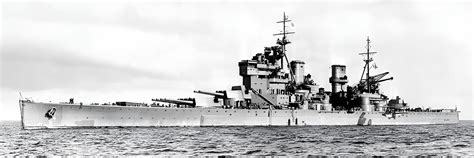
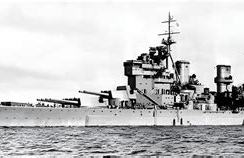
HMS Prince of Wales.
HMS Prince of Wales was one of the most tragic and historically important British battleships of the Second World War. Her active career lasted less than a year, yet in that short time she was present at some of the most symbolic naval moments of 1941. She fought the German battleship Bismarck in the Denmark Strait during the action that destroyed HMS Hood.
She carried Winston Churchill across the Atlantic to meet President Franklin D. Roosevelt at the conference that produced the Atlantic Charter. She escorted Mediterranean operations, sailed to the Far East as a visible deterrent to Japan, and was sunk off Malaya on 10 December 1941 alongside HMS Repulse. Her loss marked one of the clearest demonstrations that even the newest battleships could be destroyed by air power when operating without adequate fighter protection.
Prince of Wales was a King George V-class battleship, built at Cammell Laird’s yard at Birkenhead. She was ordered in 1936, laid down on 1 January 1937, launched on 3 May 1939, commissioned on 19 January 1941, and completed on 31 March 1941. Her pennant number was 53. She was originally to have been named King Edward VIII, but after Edward VIII’s abdication the ship was renamed Prince of Wales. Her construction therefore began with a symbolic change even before she took shape on the slipway. She belonged to a class designed under treaty limitations, intended to combine heavy armour, modern machinery, useful speed and a main battery of 14-inch guns within the restrictions of interwar naval agreements.
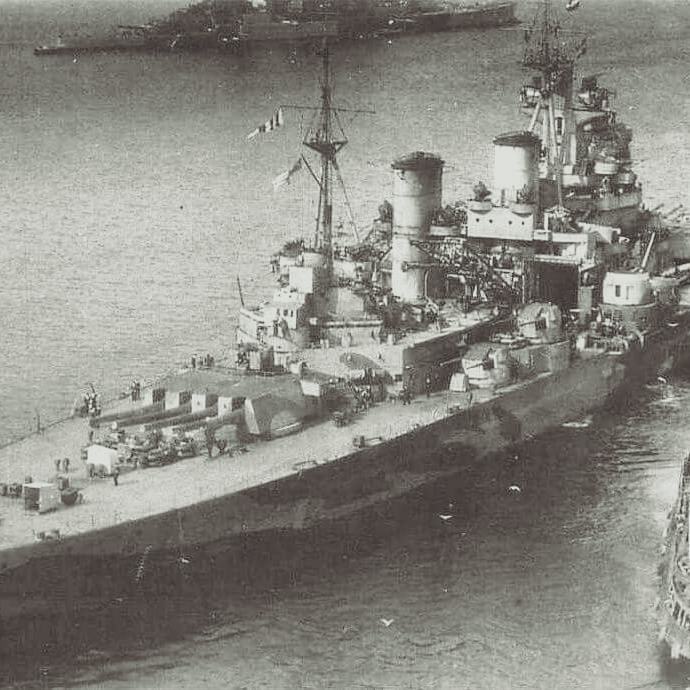
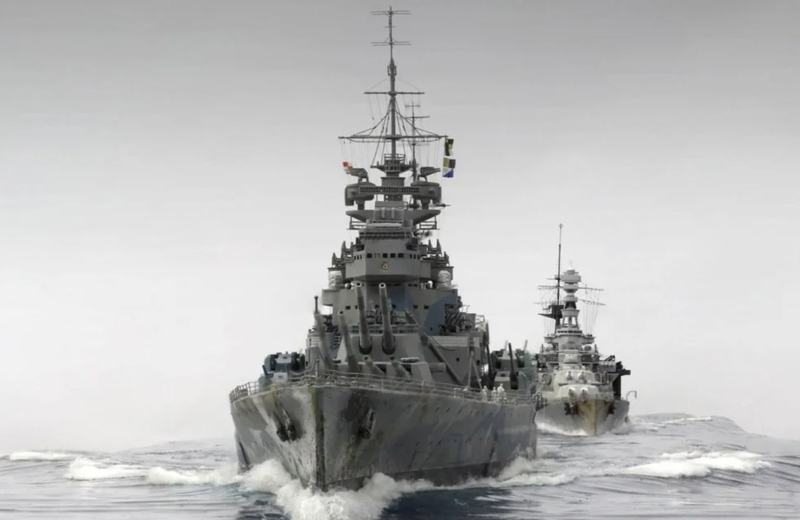
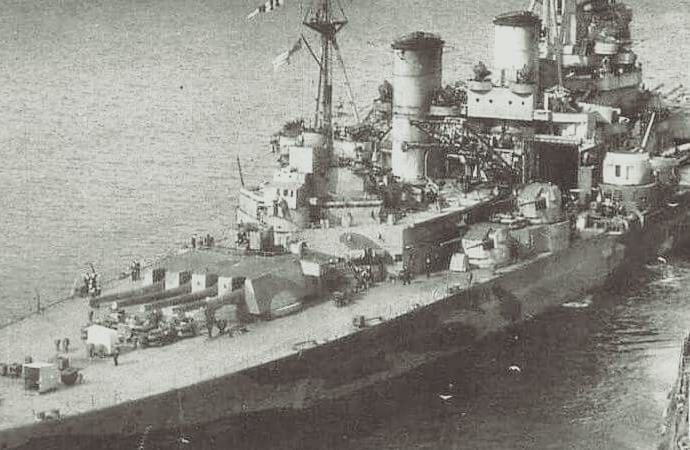
HMS Prince of Wales (53), a King George V-class battleship of the Royal Navy
The King George V class reflected the difficult naval design problems of the 1930s. Britain needed modern battleships, but it also had to work within naval treaty limits and uncertain international politics. The result was a class armed with ten 14-inch guns in two quadruple turrets and one twin turret. This was not the largest possible gun calibre, and later critics often compared the 14-inch armament unfavourably with the 15-inch and 16-inch guns carried by some foreign ships. Yet the design placed great emphasis on protection, subdivision, fire control and modern dual-purpose secondary armament. Prince of Wales was not a battlecruiser like Hood, nor an old reconstructed veteran like Warspite. She was a new treaty battleship, designed for a world where aircraft, submarines, radar, long-range gunnery and economic limits all mattered.
Her machinery consisted of eight Admiralty three-drum boilers supplying geared steam turbines on four shafts. Her power was around 100,000 shaft horsepower, with more available under forced conditions, and she was capable of about 28 knots. Her fully loaded displacement exceeded 43,000 tons. These figures made her a powerful and modern capital ship, but they also concealed the difficulties of wartime completion. Prince of Wales entered service before all defects had been fully corrected. Wartime urgency, bombing damage while fitting out, late delivery of gun mountings and the desperate need for capital ships pushed her into operation before she had enjoyed the sort of long working-up period that a complex battleship required.
The industrial history of Prince of Wales belongs to Birkenhead and the great shipbuilding community of Cammell Laird. A battleship was not merely assembled; it was created by an enormous network of labour. Shipwrights, steelworkers, riveters, welders, draughtsmen, armour specialists, electricians, turbine engineers, pipefitters, crane drivers, inspectors and naval overseers all contributed to her making. Her hull, armour, turrets, magazines, boilers, turbines, electrical systems, fire-control equipment and communications spaces represented the labour of thousands. Cammell Laird had built many important warships, and Prince of Wales was among the most complex products of that industrial tradition.
Even before completion, the ship was touched by war. In August 1940, while still fitting out at Birkenhead, Prince of Wales was attacked by German aircraft. A bomb exploded underwater near her port side, buckling plating, springing rivets and causing flooding. Because she was incomplete, many systems were not yet fully tested or operational, and local fire services and shipyard workers had to help control the flooding. She was later dry-docked for repair. This damage, combined with delays in her main armament, affected her completion schedule. The fact that she still entered service in early 1941 shows how urgently the Royal Navy needed new capital ships.
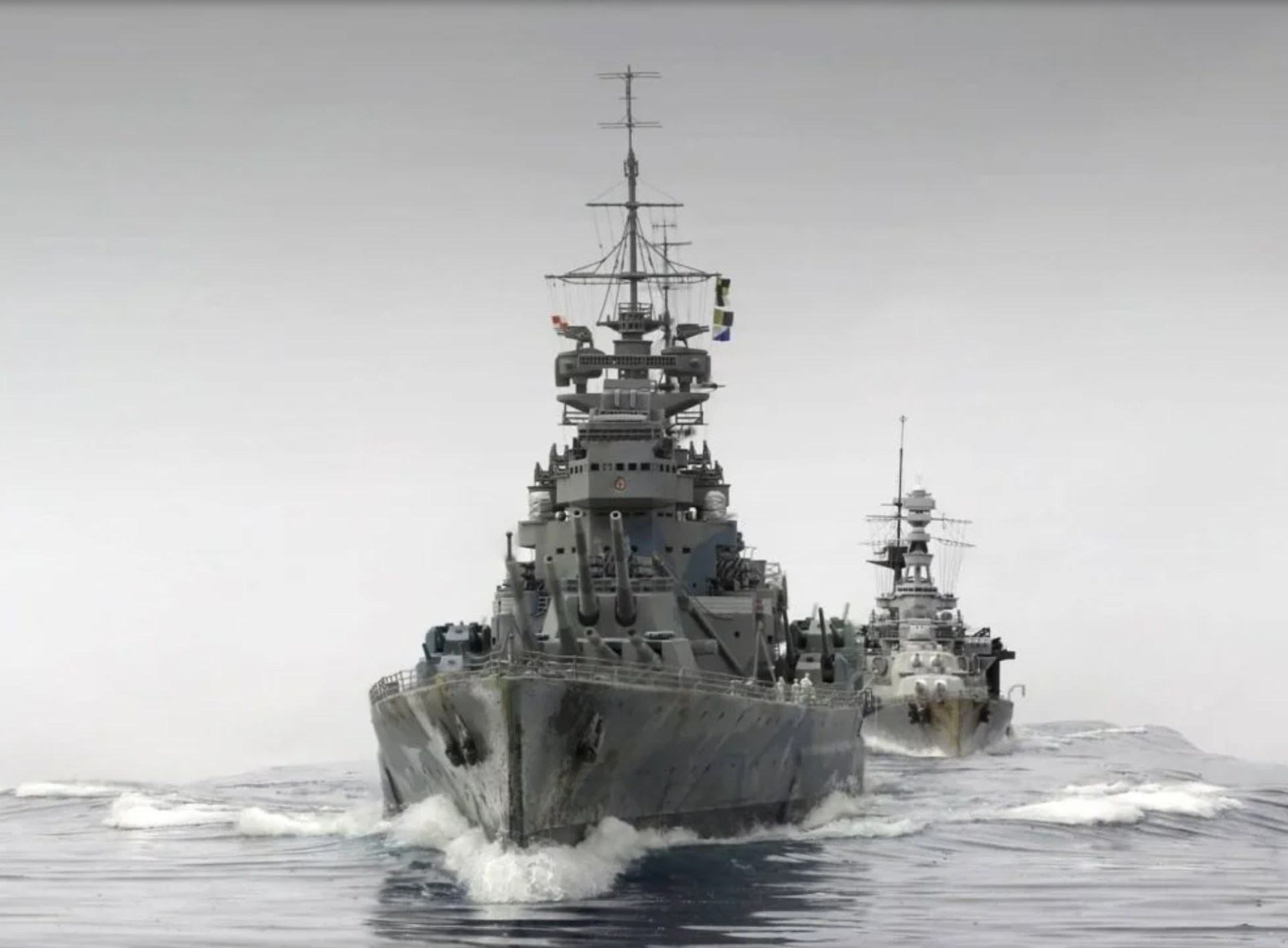
Her first major action came with startling speed. In May 1941, Prince of Wales was sent with HMS Hood to intercept the German battleship Bismarck and the heavy cruiser Prinz Eugen, which were attempting to break into the Atlantic during Operation Rheinübung. Captain John Leach commanded Prince of Wales. Vice-Admiral Lancelot Holland flew his flag in Hood. Prince of Wales was still not fully worked up, and her main-gun mountings were known to be troublesome. Vickers-Armstrong technicians remained aboard to help deal with defects. This was an unusual but revealing detail: the ship went into one of the most famous naval actions of the war still carrying civilian technical expertise because her main battery was not yet entirely reliable.
The Battle of the Denmark Strait began on the morning of 24 May 1941. Hood and Prince of Wales approached the German force in poor visibility and heavy seas. Holland intended to close the range quickly, reducing the danger to Hood from plunging shellfire. In the early phase, the British ships had restricted arcs of fire, while the Germans were able to reply with growing accuracy. Hood was hit and then destroyed by a catastrophic explosion. Prince of Wales had to turn sharply to avoid the wreckage of the great battlecruiser. In a few terrible moments the Royal Navy had lost its most famous ship, and Prince of Wales found herself under fire from both Bismarck and Prinz Eugen.
Prince of Wales continued fighting despite mechanical problems in her main armament and hits from German shells. She scored hits on Bismarck, one of which contributed to fuel loss and helped force the German battleship to abandon her Atlantic raiding mission and seek repair. This was strategically significant. Although the immediate action was a British disaster because of Hood’s destruction, Prince of Wales had damaged Bismarck enough to affect the German operation. Captain Leach eventually disengaged under smoke. He has sometimes been criticised by those who view withdrawal as failure, but his decision preserved a damaged, newly commissioned ship whose guns were malfunctioning and whose consort had just been annihilated. The damage to Bismarck helped set the conditions for the later British pursuit and sinking of the German battleship on 27 May 1941.
The Denmark Strait action gave Prince of Wales a strange reputation: she had survived where Hood had not, but she had also withdrawn from battle. A more balanced judgement recognises the circumstances. Prince of Wales was new, mechanically immature, and fighting one of the most dangerous enemy ships afloat. Her crew had seen Hood explode, endured direct hits, managed gunnery defects and continued firing. The action exposed the cost of sending an unready ship into battle, but it also showed the discipline and courage of her officers and ratings. Thirteen of her crew were killed and others wounded. Later inspection found unexploded German shell damage, confirming how close she had come to still more serious injury.
After repair and refit, Prince of Wales entered a different kind of history. In August 1941 she carried Prime Minister Winston Churchill across the Atlantic to meet President Franklin D. Roosevelt in Placentia Bay, Newfoundland. This secret conference produced the Atlantic Charter, a statement of shared British and American principles for the post-war world. The use of Prince of Wales was deeply symbolic. A new British battleship, recently blooded against Bismarck, carried Britain’s wartime prime minister to meet the leader of a still officially neutral United States. The ship became a stage for diplomacy as much as war.
The Atlantic meeting also shows how battleships functioned beyond combat. They were mobile sovereign spaces, secure headquarters, symbols of national power and instruments of political theatre. Churchill’s presence aboard Prince of Wales gave the ship a place in the diplomatic history of the Second World War. At a time when Britain needed American support, the battleship represented endurance, defiance and continuity. She had faced Bismarck in May; by August she was carrying the prime minister to help shape Allied war aims.
After the Atlantic Charter voyage, Prince of Wales served in Mediterranean-related operations, including escort duties connected with Malta convoys. Malta was vital to British strategy because it threatened Axis supply routes to North Africa, but it was under intense air and naval pressure. The presence of a modern battleship in such operations reflected the continuing value of capital ships as fleet cover, deterrent and anti-aircraft platforms, even as aircraft became increasingly dangerous to them.
The final phase of Prince of Wales’s career began with the decision to send a powerful naval force to the Far East. British leaders hoped that a visible force of modern capital ships at Singapore would deter Japanese aggression. Churchill strongly favoured dispatching a modern battleship. The resulting force, later known as Force Z, consisted principally of Prince of Wales, the battlecruiser HMS Repulse, and accompanying destroyers. The aircraft carrier HMS Indomitable was originally intended to join them, but she ran aground in the Caribbean and was unavailable. This absence proved critical. Without a carrier, Force Z would operate without organic fighter protection in a theatre where Japanese air power was strong, well trained and capable of long-range attack.
Prince of Wales sailed from home waters in October 1941 and reached Singapore in early December. She became the flagship of Force Z under Admiral Sir Tom Phillips. The arrival of Prince of Wales and Repulse was intended to reassure British, imperial and Allied interests in Southeast Asia. Yet the strategic situation had moved beyond the assumptions behind the deployment. Japanese forces were preparing for coordinated attacks across the Pacific and Southeast Asia. On 7/8 December 1941, depending on local date, Japan struck at Pearl Harbor, Malaya and other targets. The Far Eastern war had begun.
Force Z sailed from Singapore to intercept Japanese invasion forces off Malaya. The intention was bold: use surface ships to attack Japanese transports and disrupt landings. In earlier naval thinking, this was precisely the kind of mission for which fast capital ships existed. But Force Z had little air cover, imperfect reconnaissance, and operated in waters within reach of Japanese land-based naval aircraft. Japanese aircraft shadowed the force and then attacked on 10 December 1941. Imperial War Museums preserves contemporary and veteran accounts describing the intention to stop Japanese landings, the shadowing of Force Z, the attacks by Japanese bombers and torpedo bombers, and the rescue of survivors.
The attack on Prince of Wales was devastating. Torpedoes caused severe underwater damage. One early hit had especially serious consequences because it damaged the port outer propeller shaft area, causing flooding and mechanical disruption. Electrical failures followed, depriving parts of the ship of power and making damage control far more difficult. Pumps, communications, lighting and internal organisation were affected. As flooding spread and list increased, the ship’s anti-aircraft defence became less effective. Bomb hits added further damage. The loss of electrical power and the progressive failure of damage-control capacity were central to her sinking.
Repulse was also attacked and sunk. Prince of Wales, newer and more heavily armoured, survived longer but was doomed. Admiral Phillips and Captain Leach were both lost. The destroyers rescued many survivors from the sea, but hundreds of men died. The sinking of Prince of Wales and Repulse was a shock of global importance. They were the first capital ships sunk solely by air attack while manoeuvring at sea, without being first disabled by surface action. This did not mean that battleships instantly became useless, but it made impossible any serious belief that they could operate safely in hostile waters without air cover.
The human experience of the sinking was terrifying. Men who had expected a surface engagement found themselves under repeated air attack. They endured explosions, flooding, darkness, heat, smoke, listing decks, failing communications and the knowledge that the ship was dying beneath them. Damage-control parties worked in compartments that were flooding or without power. Ammunition supply teams continued to support anti-aircraft guns while the ship’s condition worsened. Survivors later remembered both confusion and discipline: the shock of torpedo hits, the struggle to keep weapons firing, the abandonment of ship, and the rescue by destroyers.
The loss of Prince of Wales also had a wider strategic and psychological effect. Only days after Pearl Harbor, Britain had lost two major capital ships in the Far East. Singapore, long imagined as the anchor of British defence in Asia, was exposed. The sinking undermined the deterrent purpose of Force Z and demonstrated that naval prestige could not compensate for inadequate air power, reconnaissance and integrated command. It was one of the great symbolic defeats of British imperial defence. Within two months, Singapore itself would fall.
The ship’s fate also changed naval argument. Before December 1941, many officers understood that aircraft were dangerous, but the battleship still retained great prestige. After Force Z, no major navy could ignore the lesson. A battleship without air cover was vulnerable even when fast, modern and heavily armed. Prince of Wales was not an old relic. She was one of Britain’s newest battleships. Her destruction by land-based torpedo bombers and bombers showed that modernity alone did not guarantee survival. Protection had to include fighter defence, radar warning, coordinated air-sea operations and effective damage control under aerial attack.
The wreck of Prince of Wales lies upside down in about 223 feet of water near Kuantan in the South China Sea. The site is a war grave and was designated a protected place under the Protection of Military Remains Act 1986. Her bell was recovered in 2002 with permission and later displayed by the National Museum of the Royal Navy. The recovery of the bell gave a tangible memorial focus to a ship whose hull remains beneath the sea with many of her dead.
Prince of Wales’s short career has sometimes been overshadowed by the ships around her: Hood, whose destruction shocked Britain; Bismarck, whose pursuit became legend; Repulse, lost beside her; and the later modern aircraft carrier that now bears the same name. Yet the battleship Prince of Wales deserves attention in her own right. She was present at three defining episodes of 1941: the battle against Bismarck, the Atlantic Charter conference, and the destruction of Force Z. Few ships had such a compressed but significant career.
Her story is also a record of the Royal Navy under extreme pressure. She was pushed into service before fully mature because Britain needed capital ships. She fought before her technical problems were solved because Bismarck had to be stopped. She carried Churchill because battleships still embodied sovereign power and security. She was sent to Singapore because Britain needed to show strength in Asia. At each stage, the demands placed upon her exceeded the comfortable pace of preparation. Her career shows a navy and empire forced to make urgent decisions in a war that moved faster than shipbuilding, refit programmes and strategic assumptions.
The social and industrial history of Prince of Wales should not be lost behind strategic lessons. The ship was built by the labour of Birkenhead and crewed by men from across Britain and the Commonwealth naval world. Her complement in December 1941 was over 1,600. Within that number were gunnery ratings, stokers, electrical artificers, signalmen, radar operators, Royal Marines, cooks, sick-berth attendants, officers, engineers, writers, supply staff and damage-control teams. They served in a new ship whose systems were advanced but demanding. They dealt with main-gun defects in the Atlantic, diplomatic ceremony in Newfoundland, tropical conditions en route to Singapore and mortal danger off Malaya.
Her engineering history is equally revealing. Prince of Wales embodied the late interwar battleship: heavily armoured, radar-equipped, turbine-driven, fitted with dual-purpose secondary guns and designed under treaty compromise. Yet her loss showed that protection was no longer only a matter of armour thickness. Torpedo defence, electrical resilience, shaft integrity, pumping capacity, radar reliability in tropical conditions, anti-aircraft fire control and air cover were all part of survival. A battleship was a system of systems. Once enough of those systems failed, even a modern capital ship could be overwhelmed.
The final judgement on HMS Prince of Wales should avoid both exaggeration and dismissal. She was not a failed ship simply because she was lost. She damaged Bismarck, performed a major diplomatic role, and served where she was ordered in impossible circumstances. Nor was she invincible because she was modern. Her short life exposed the vulnerability of capital ships to technical immaturity, strategic overreach and air power. Her loss off Malaya was not merely the destruction of one battleship; it was a warning that naval warfare had entered a new age.
HMS Prince of Wales, pennant 53, was built at Cammell Laird, launched in 1939, commissioned in 1941, armed with ten 14-inch guns, driven by geared steam turbines, and sunk by Japanese aircraft on 10 December 1941. Those facts form the outline of her record. The deeper history is one of haste, courage, symbolism and transition. She was a new battleship born into an old strategic imagination and destroyed by the realities of modern air-sea warfare. She carried Churchill toward the Atlantic Charter, fought Bismarck in the shadow of Hood’s destruction, and died with Force Z in the opening days of the Pacific War.
Her wreck remains in the South China Sea, but her historical meaning extends far beyond the place where she sank. HMS Prince of Wales represents the end of unquestioned battleship prestige, the vulnerability of empire in Asia, and the human cost of naval decisions made under pressure. She was a powerful ship, a national symbol, a diplomatic platform and a war grave. In less than twelve months of active service, she became one of the most significant Royal Navy battleships of the Second World War, not because she served long, but because every major episode of her career revealed a turning point in the war at sea.
HMS Prince of Wales (53)