HMS Warspite (03)
HMS Warspite: builder, dates, armament, propulsion, service career and fate.
HMS Warspite (03) at sea
HMS Warspite was one of the most celebrated battleships in Royal Navy history. Known affectionately as the “Grand Old Lady,” she served through two world wars, survived repeated damage, fought in some of the most important naval actions of the twentieth century, and earned a reputation for endurance almost unmatched by any British warship. Her career stretched from the age of the dreadnought battleship to the era of aircraft, radar and guided weapons. She was present at Jutland in 1916, fought at Narvik, Calabria, Matapan, Crete, Sicily, Salerno, Normandy and Walcheren, and ended her life not in a formal breaker’s yard but stranded off the Cornish coast, still resisting the ordinary fate of a scrapped ship. Her record made her one of the most honoured ships ever to serve the Royal Navy. HMS Warspite received fifteen battle honours in her twentieth-century career, including Jutland, Narvik, Calabria, Matapan, Sicily, Salerno, Normandy and Walcheren.
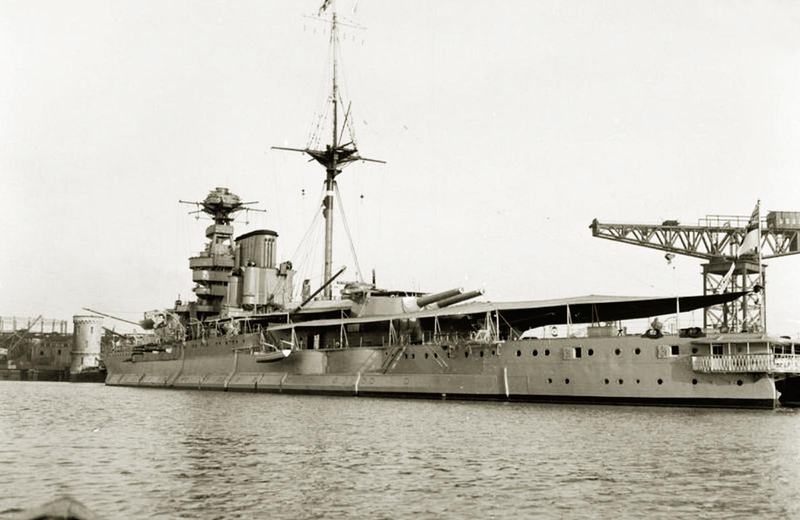
Warspite was a Queen Elizabeth-class battleship, one of five ships built for the Royal Navy in the early 1910s. The class represented a bold advance in British capital-ship design. Earlier dreadnoughts had already transformed naval warfare by concentrating heavy guns in a single main battery, but the Queen Elizabeths went further. They mounted eight 15-inch guns, burned oil fuel instead of coal as their main fuel, and were designed to be faster than previous British battleships. Warspite was laid down at Devonport Royal Dockyard on 31 October 1912, launched on 26 November 1913, and commissioned on 8 March 1915. Her construction at Devonport linked her to one of the Royal Navy’s great state dockyards, where shipwrights, engineers, armourers, draughtsmen, boilermakers, electricians and naval overseers turned Admiralty policy into steel reality.
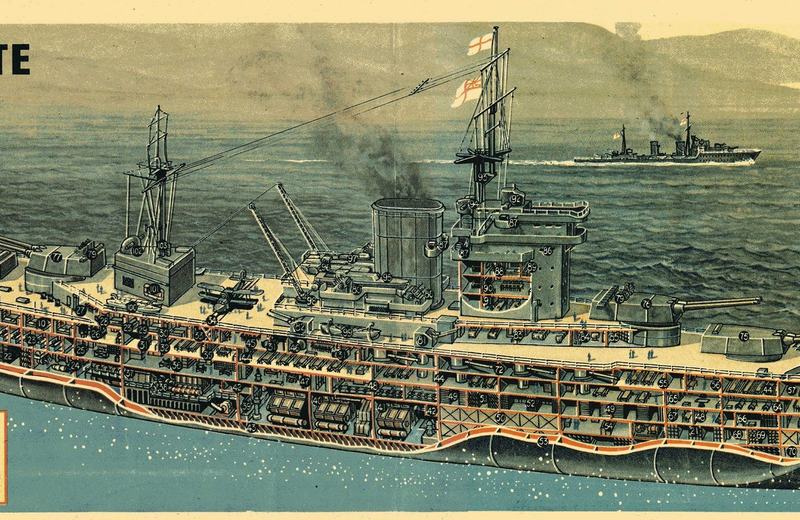
The Queen Elizabeth class was designed as a fast battleship squadron able to operate with the fleet and engage the leading ships of an enemy battle line. Warspite’s principal armament consisted of eight BL 15-inch Mk I guns in four twin turrets, arranged in two superfiring pairs forward and aft. These guns became among the most successful heavy naval weapons ever used by the Royal Navy. They gave Warspite hitting power against enemy battleships, cruisers, shore batteries and fortified positions. As built, she also carried 6-inch secondary guns, anti-aircraft guns and torpedo tubes. Her armour was intended to protect her against heavy shellfire, while her machinery gave her a designed speed in the mid-twenty-knot range, fast for a battleship of her generation.
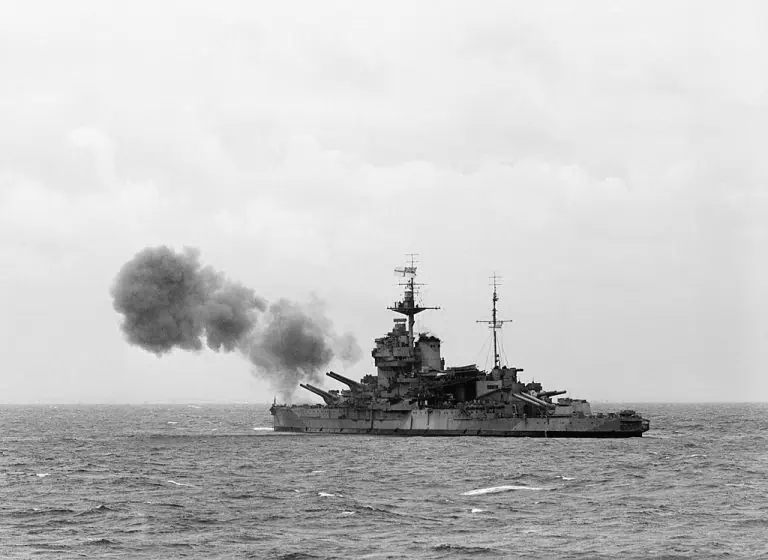
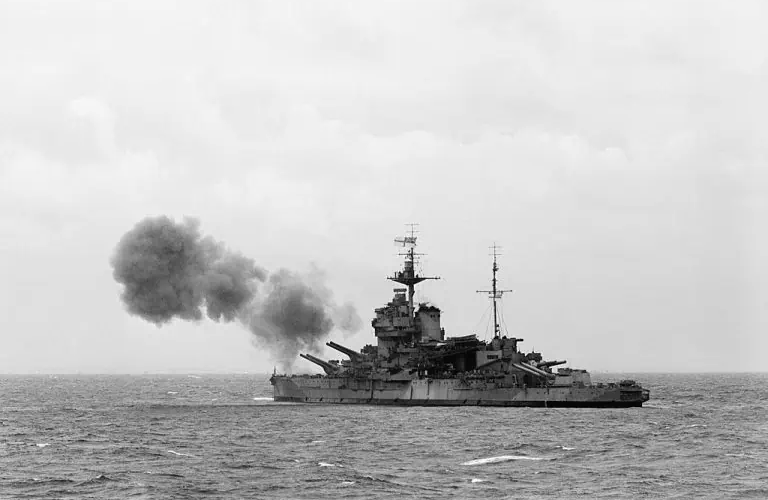
HMS Warspite Invasion of Normandy 6 June 1944
Her propulsion was part of the class’s innovation. Warspite used steam turbines driving four shafts, with steam supplied by Yarrow boilers. Oil fuel gave operational advantages over coal, including easier handling, less manpower-intensive fuelling and better performance. The adoption of oil, however, also reflected strategic risk. Britain possessed coal in abundance, but oil required secure overseas supply. The decision to build oil-fired capital ships was therefore technological, logistical and imperial at once. Warspite’s machinery made her a powerful modern battleship, but it also tied her to the global fuel networks that sustained British sea power.
Warspite entered service during the First World War and joined the Grand Fleet, the immense British naval concentration created to contain and, if necessary, destroy the German High Seas Fleet.
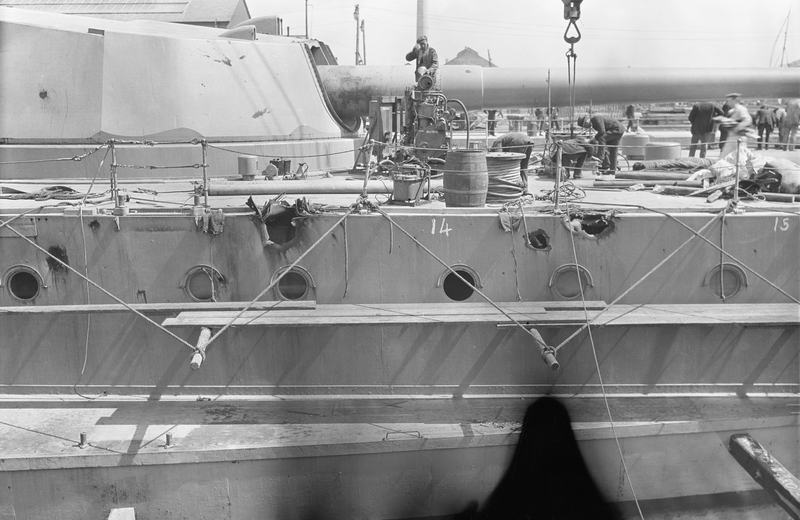
Her first years were not free from misfortune. In late 1915 she grounded in the River Forth, damaging her hull, and later collided with her sister ship HMS Barham during exercises. Such accidents were not unusual in a fleet operating large, powerful vessels in constrained waters and poor visibility, but they foreshadowed Warspite’s long association with damage, repair and return to service. Again and again, she would be hit, strained, patched, modernised and sent back to war.
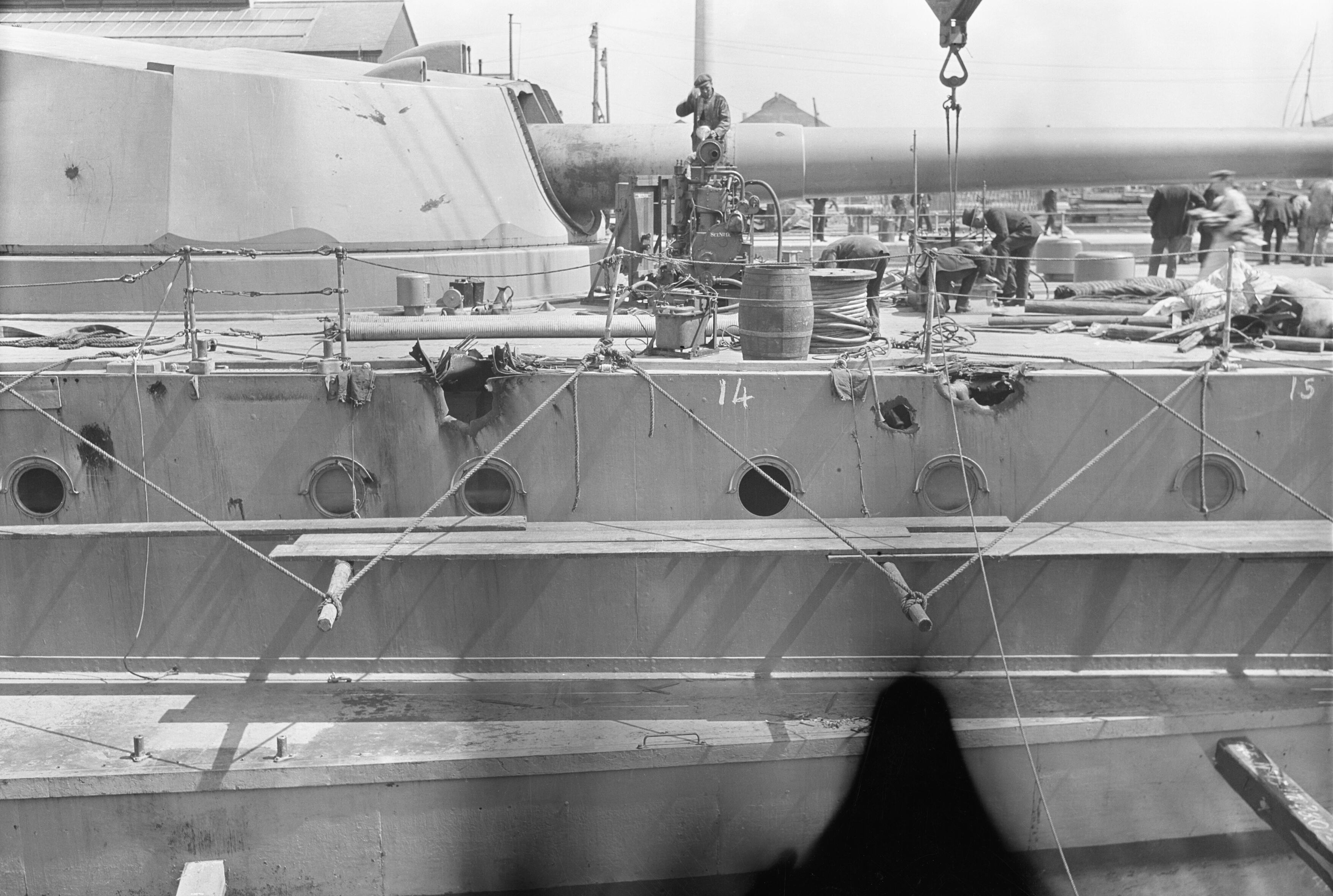
Her first great battle came at Jutland on 31 May 1916. Warspite served with the 5th Battle Squadron, made up of Queen Elizabeth-class battleships. These ships were among the most powerful units available to the Royal Navy, and during the battle they fought hard against German battlecruisers and battleships. Warspite’s experience at Jutland became famous because of a steering failure. Her helm jammed, causing her to turn in circles under enemy fire. This exposed her to repeated hits from German heavy guns. The ship suffered serious damage, but she survived and eventually withdrew. Her ordeal at Jutland became one of the defining episodes of her early career: badly hit, technically compromised, but not destroyed.
The importance of Warspite’s survival at Jutland lies not only in the number of hits she endured but in what it revealed about the Queen Elizabeth design. British battlecruisers at Jutland suffered catastrophic magazine explosions, but Warspite, though damaged, remained afloat. Her armour, subdivision, damage control and crew discipline kept her alive. The men aboard worked in smoke, darkness, noise and danger to control flooding, maintain machinery, fight fires and keep the ship under command. A battleship’s reputation often centres on guns and armour, but survival depended equally on the men below decks: stokers, engineers, electricians, shipwrights, damage-control parties, medical staff and communications teams.
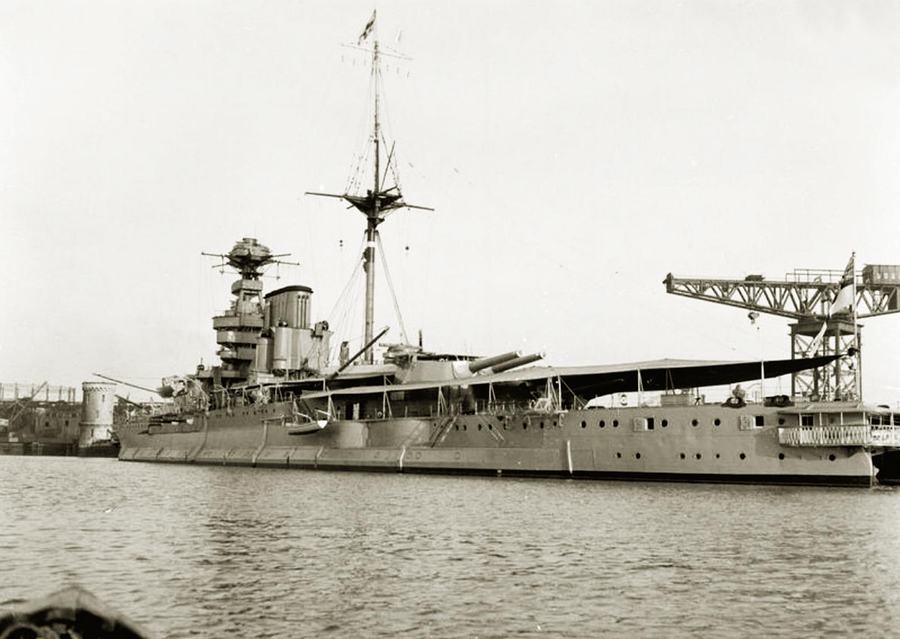
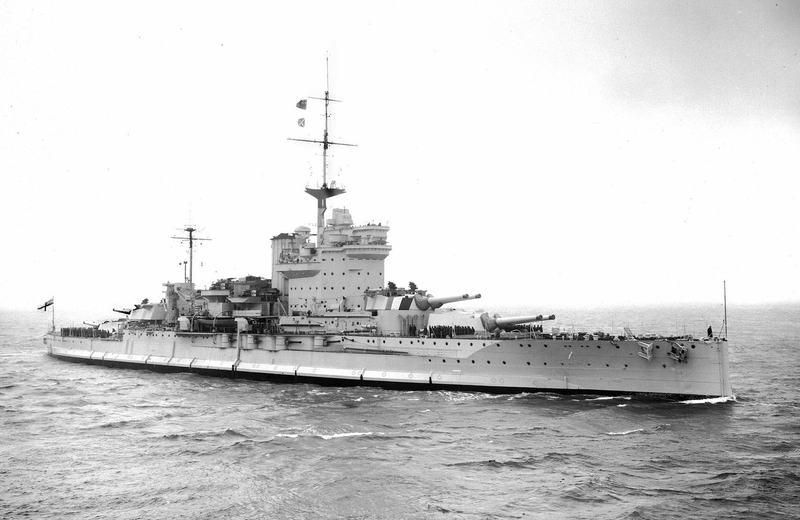
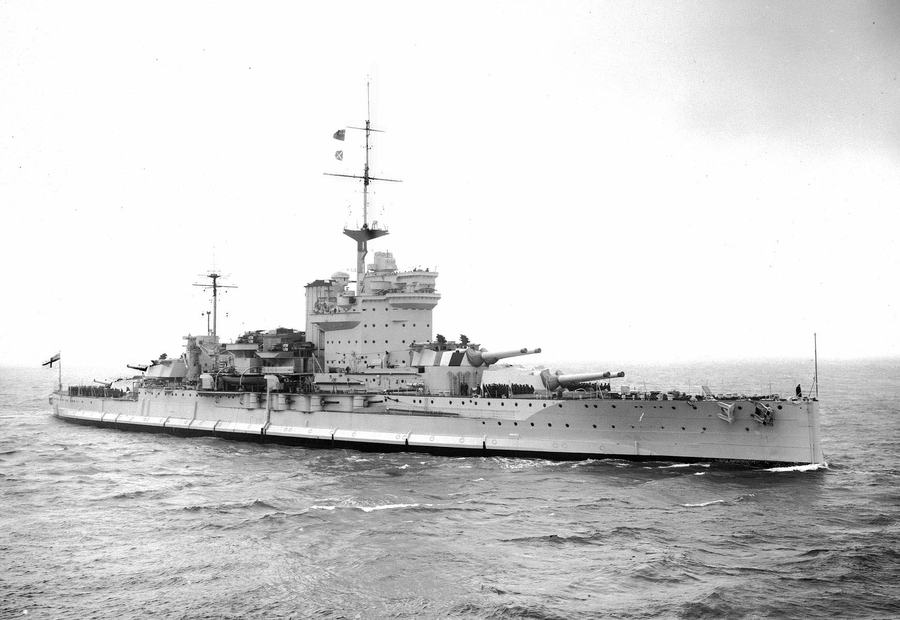
HMS Warspite, "The Grand Old Lady" in 1933.
After Jutland, Warspite continued to serve with the Grand Fleet. The remainder of the First World War did not bring another battle on the scale of Jutland. Much of the Grand Fleet’s work consisted of patrol, training, readiness and strategic containment. The German fleet remained a threat, but the decisive clash imagined before the war never recurred. Warspite’s guns had been fired in one of the largest naval battles in history, but her career was far from over. Unlike many First World War battleships, she would not disappear into immediate obsolescence.
The interwar period was a time of treaties, naval reductions and technological change. Warspite remained valuable, but the world around her changed rapidly. Aircraft became more dangerous.
Anti-aircraft weapons became more important. Fire control improved. Torpedoes, mines and submarines remained serious threats. Older battleships required reconstruction if they were to remain credible. Warspite underwent a major rebuild in the 1930s, completed in 1937. This reconstruction transformed her appearance and capabilities. She received new machinery, improved protection, modernised fire control, aircraft facilities and strengthened anti-aircraft armament. Her beam increased, her silhouette changed, and her internal arrangements were altered for a new era of naval warfare.
This rebuilding is central to understanding Warspite’s Second World War career. She was not simply an old battleship dragged into another conflict. She was an old hull made newly useful by heavy investment in engineering and weapons systems. The Royal Navy did not have unlimited resources, and new battleships took years to build. Modernising proven ships was therefore an essential policy. Warspite’s rebuild made her slower than the newest fast battleships, but still powerful, protected and operationally valuable. Her 15-inch guns remained formidable; her improved systems made her far more capable than she would otherwise have been.
When the Second World War began in September 1939, Warspite was already an elderly ship by naval standards, but she was still a first-rate fighting unit. Her early wartime service included Atlantic duties and operations connected with the German threat to Allied shipping. In April 1940 she played a central role in the Second Battle of Narvik. Germany had invaded Norway, and German destroyers were trapped in Ofotfjord near Narvik. Warspite, flying the flag of Vice-Admiral William Whitworth, entered the fjord with British destroyers to destroy them. Her presence brought heavy gunfire, command authority and air spotting to a difficult confined-water action. During the operation, her aircraft contributed significantly: a Fairey Swordfish floatplane from Warspite sank the German submarine U-64, one of the notable early cases of an aircraft from a battleship destroying a submarine.
Narvik showed Warspite’s flexibility. She had been designed to fight enemy capital ships in battle lines, yet here she was operating inside a Norwegian fjord, supporting destroyer action and using aircraft for reconnaissance and attack. Her heavy guns helped finish German destroyers that had run short of fuel and ammunition. The battle was a British success and added to Warspite’s growing reputation. It also revealed that an old battleship, properly handled, could still be decisive in coastal and restricted waters.
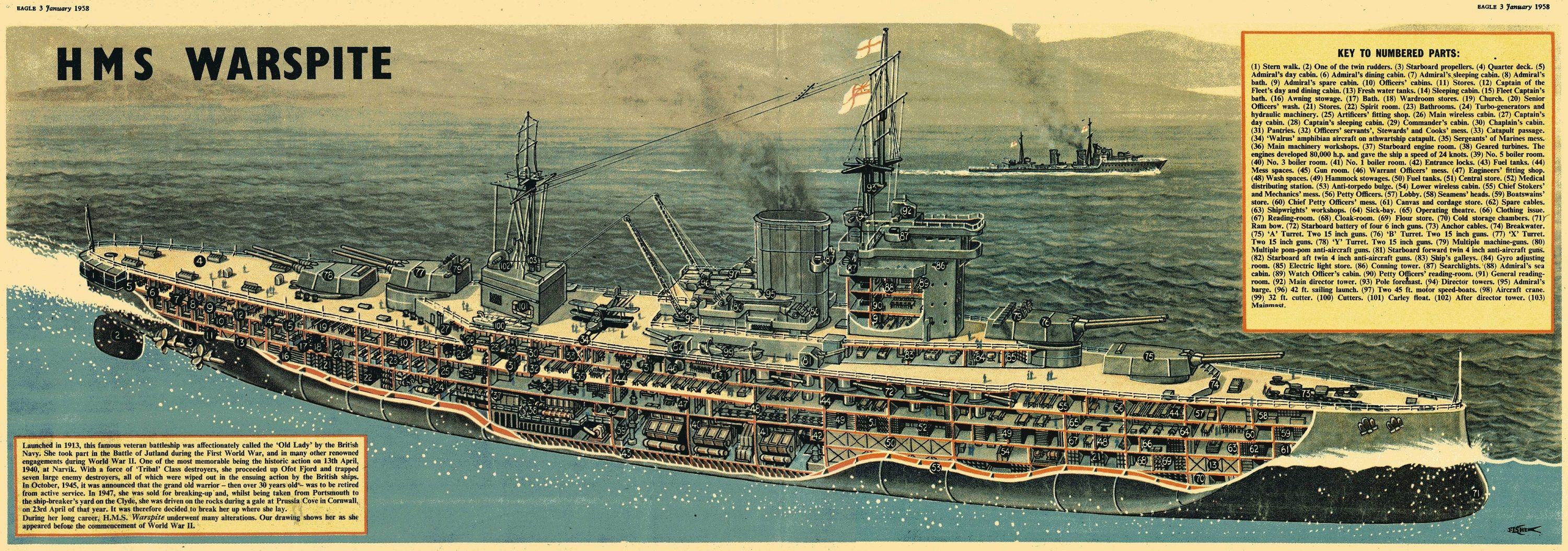
Later in 1940 Warspite served in the Mediterranean, where her career reached another peak. The Mediterranean was a complex naval theatre: narrow seas, strong air threat, convoy routes, island bases, Italian fleet operations and British imperial communications all intersected there. Warspite became a flagship of Admiral Sir Andrew Cunningham, one of the Royal Navy’s great fighting admirals. Cunningham’s later description of her as the “Grand Old Lady” helped cement the nickname by which she is still remembered.
At the Battle of Calabria in July 1940, Warspite achieved one of the longest-range hits in naval gunnery history when she struck the Italian battleship Giulio Cesare at extreme range. The hit did not destroy the Italian ship, but it demonstrated the continuing reach and accuracy of heavy naval guns when combined with effective fire control and experienced gunnery. For Warspite’s crew, such an achievement was not merely a statistic. It reflected years of training: range-taking, plotting, loading, turret drill, communications, spotting and correction. A 15-inch gun hit at long range was the result of a ship-wide system of human and mechanical coordination.
Warspite’s Mediterranean service continued through some of the hardest naval operations of the war. In March 1941 she took part in the Battle of Cape Matapan, where British forces inflicted a severe defeat on the Italian fleet. Night action, radar, aircraft reconnaissance and aggressive command combined to give the British an advantage. Warspite, alongside other battleships, helped destroy Italian cruisers and destroyers at close range in darkness. Matapan showed the old battleship operating within a modern system of intelligence, radar, aircraft and coordinated fleet movement. Heavy guns still mattered, but they were now part of a wider tactical network.
The Mediterranean also brought danger from the air. During the Battle of Crete in 1941, British ships faced intense German air attack. Warspite was damaged by bombs, again demonstrating the vulnerability of even heavily armoured battleships to aircraft. Crete was a painful lesson for the Royal Navy: courage and seamanship could not fully offset air superiority. Warspite survived, but the damage required repair and further service adjustments. The ship’s career became a repeated cycle of action, damage, repair and return.
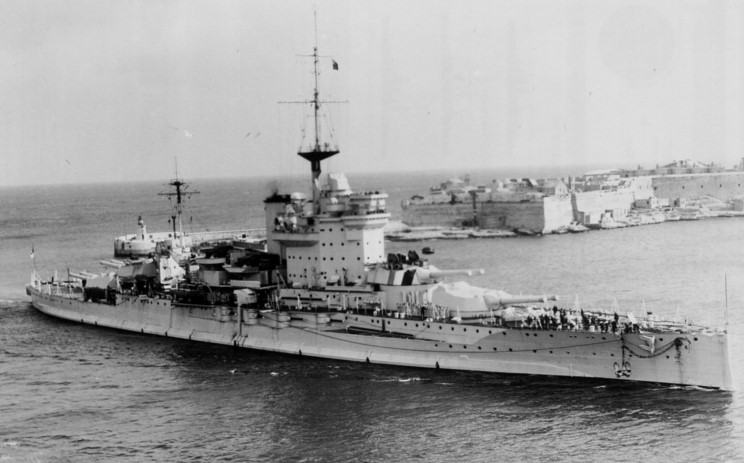
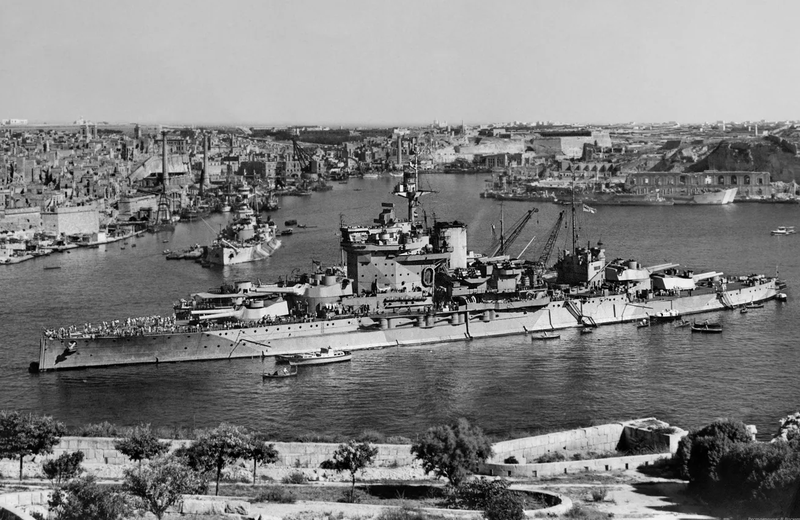
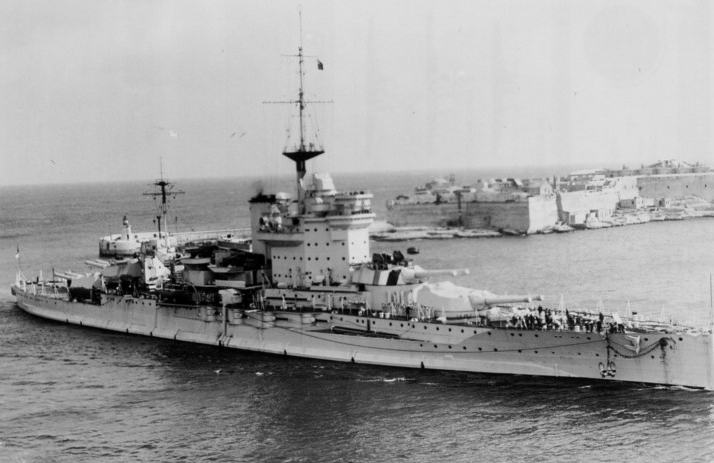
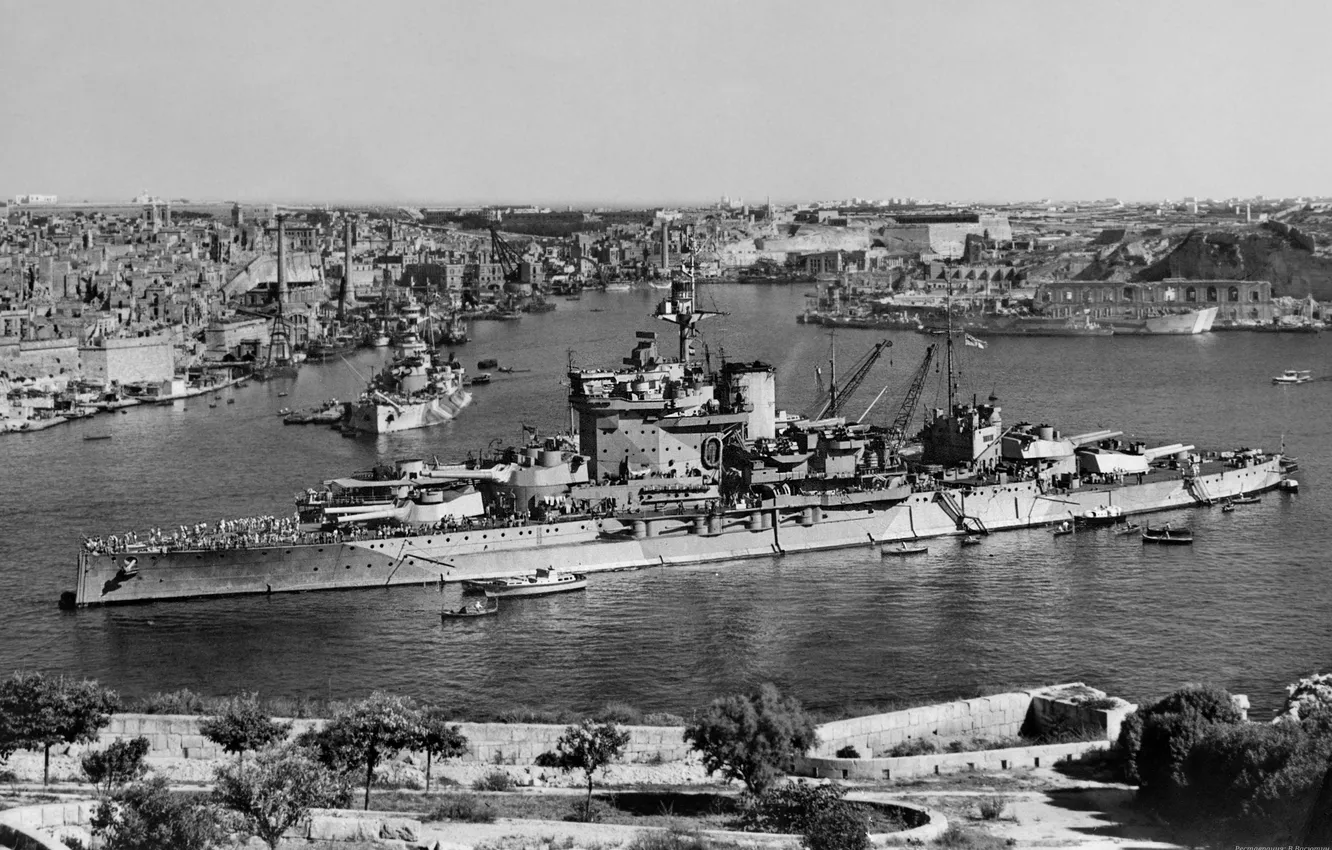
HMS Warspite entering Grand Harbour, Malta, 1940
After a period in the Indian Ocean, Warspite returned to the Mediterranean for the Allied invasions of Sicily and Italy in 1943. By then she was an old ship fighting in a war increasingly dominated by air power and amphibious operations. Her role shifted heavily toward naval gunfire support. Battleships could deliver sustained, heavy bombardment against shore positions, coastal batteries, transport nodes and defensive lines. For soldiers ashore, the arrival of heavy naval gunfire could be decisive. Warspite’s 15-inch shells brought the power of a capital ship directly into land warfare.
At Salerno in September 1943, Warspite suffered one of the most serious attacks of her career. She was hit by German radio-controlled glide bombs, a new and dangerous form of guided weapon.
The damage was severe and required lengthy repair. This episode marked the arrival of a new threat environment. Warspite had been built before aircraft carriers became dominant, before radar matured, and long before guided anti-ship weapons. Yet in 1943 she was being attacked by precision-guided munitions, a technology that pointed toward the future of naval warfare. That she survived such an attack added another chapter to her legend of endurance.
Despite the damage, Warspite was not finished. She returned to service for the Normandy landings in June 1944. By then she had not been fully restored to her earlier condition, but her guns were still valuable. She bombarded German positions in support of the Allied invasion. Her fire helped suppress coastal defences and support troops fighting inland from the beaches. For a ship launched before the First World War, to be firing in support of the liberation of France in 1944 was extraordinary. Warspite had moved from the dreadnought age to combined amphibious warfare.
She also supported operations against Walcheren later in 1944. The Walcheren operation was part of the struggle to open access to Antwerp, a vital port for Allied logistics. German defences on the island had to be neutralised, and naval bombardment played a role. Warspite’s participation in these final bombardments showed the continuing practical value of heavy guns, even when the battleship as a type was losing its central position in naval strategy.
The social history of Warspite lies in the thousands of men who served aboard her over three decades. Her complement varied across her career, but she carried more than a thousand officers and ratings during much of her service. They lived in a world of steel decks, mess tables, hammocks, turret machinery, boiler rooms, magazines, wireless offices, sick bays, galleys and workshops. The ship demanded constant labour. Men cleaned, painted, repaired, loaded, signalled, plotted, steered, cooked, nursed, drilled and watched. In action they endured blast, smoke, splinters, fire and flooding. In harbour they maintained the routines that made action possible.
Her industrial history was equally broad. Devonport built her and repeatedly shaped her career through refit and repair. Rosyth, Jarrow, Portsmouth and other dockyard and repair facilities entered her story at different moments. Modernisation in the 1930s required large-scale industrial work: new boilers, altered superstructure, new armour arrangements, improved fire control, aircraft handling equipment and anti-aircraft weapons. Wartime repairs after bomb and glide-bomb damage demanded emergency engineering on a massive scale. Warspite was not one ship built once; she was a continuously remade weapon system, sustained by dockyard labour across decades.
By 1945, Warspite was worn out. She had endured shellfire, collision, grounding, bombing, mines and guided weapons. More modern ships were available, and the Royal Navy was looking toward the post-war world. She was decommissioned on 1 February 1945 and later sold for scrap. There were hopes among some admirers that she might be preserved, but post-war Britain faced severe economic pressure, and preserving a large battleship was not a simple undertaking.
Her final journey became one of the most famous endings of any Royal Navy ship. In 1947, while under tow to be broken up, Warspite encountered bad weather. The tow parted, and she grounded near Prussia Cove in Cornwall. Her small skeleton crew was rescued, and the ship eventually had to be broken up where she lay. Scrapping continued into the 1950s, and by 1955 she had largely disappeared from view. The image of Warspite refusing even the ordinary journey to the scrapyard fitted perfectly with her legend. She had survived so much that even her destruction seemed defiant.
Warspite’s memory remains powerful because her career seems to contain the whole arc of British battleship history. She was born from the dreadnought revolution, fought at Jutland, was rebuilt for a new technological age, fought across the Mediterranean, supported amphibious landings, endured guided weapons and ended as a relic of a vanishing era. Her story shows both the power and the vulnerability of the battleship. She could strike targets miles away with enormous force, yet aircraft and guided bombs could cripple her. She could dominate surface actions, yet she depended on repair yards, fuel supply, escorts, aircraft and communications. She was mighty, but never independent of the wider naval system.
Her reputation as the “Grand Old Lady” was not sentimental exaggeration. It captured the affection sailors and historians felt for a ship that seemed to absorb punishment and return to duty. She was not the newest ship, nor always the fastest, nor untouched by flaws. But she was present. She was there at the great moments: Jutland, Narvik, Calabria, Matapan, Salerno, Normandy. She brought heavy guns where they were needed and survived conditions that would have ended many careers.
HMS Warspite’s historical record can be summarised through basic ship data: Queen Elizabeth-class battleship, pennant number 03 in her later career, built at Devonport Royal Dockyard, launched in 1913, commissioned in 1915, armed chiefly with eight 15-inch guns, powered by steam turbines, modernised in the 1930s, decommissioned in 1945 and sold for scrap in 1947. But those facts are only the framework. The real history lies in the way she connected design ambition, dockyard skill, crew endurance and operational necessity across thirty years of war and peace.
Warspite was a weapon, but she was also a community and a symbol. She embodied the Royal Navy’s faith in heavy guns, speed, armour and engineering. She also revealed the growing importance of aircraft, radar, amphibious warfare and guided weapons. Her crew served in cramped, dangerous and exhausting conditions, yet their work gave the ship her fighting power. Her builders and refitters kept her alive long after many contemporaries had vanished. Her final grounding in Cornwall turned her end into legend.
Few ships deserve the word “veteran” as fully as HMS Warspite. She was present at the climax of the dreadnought age and still fighting when that age was ending. She survived the North Sea, Norway, the Mediterranean, German bombs, Italian shells, guided weapons and years of hard service. Her steel was eventually cut apart, but her reputation was not. HMS Warspite remains one of the great names of the Royal Navy: the Grand Old Lady, scarred and stubborn, whose long service made her not only a battleship but a witness to the transformation of naval warfare in the first half of the twentieth century.
HMS Warspite (03)