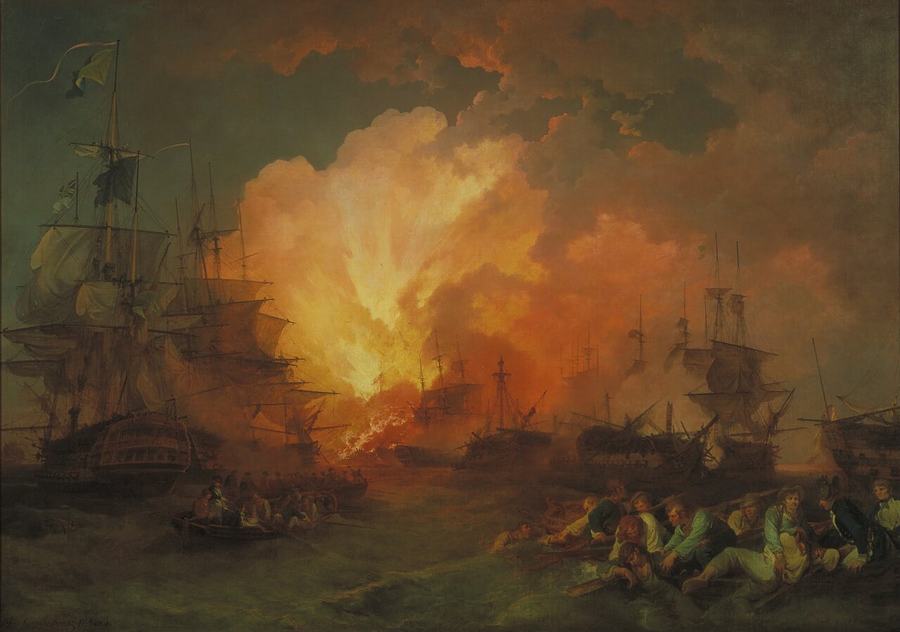
Rear-Admiral Horatio Nelson had spent weeks searching for the French fleet. When his squadron finally found it on the evening of 1 August 1798, Nelson chose to attack immediately, even though night was approaching. This decision was bold. Fighting a fleet action after dark was risky, but Nelson believed delay would give the French time to prepare, escape, or improve their position.
The British attack was aggressive and highly effective. Some of Nelson’s ships sailed along the seaward side of the French line, while others passed inside, between the French ships and the shore. This trapped several French vessels between two lines of fire. The leading French ships were overwhelmed one by one as British ships anchored close alongside and poured in broadsides at short range.
The most dramatic moment came with the destruction of the French flagship L’Orient, a huge 120-gun ship of the line. During the battle she caught fire, and late in the evening her magazine exploded with enormous force. The explosion was so powerful that fighting briefly stopped as crews on both sides were stunned by the blast. The loss of L’Orient broke the centre of the French fleet and became the defining image of the battle.
Nelson was wounded during the action when a piece of metal or splinter struck him on the head. At first he feared the wound was fatal, but he survived and continued to direct the battle. His leadership, and the discipline of his captains, helped turn a dangerous night attack into a decisive victory.