A Short History of HMS Victory - Part Nine
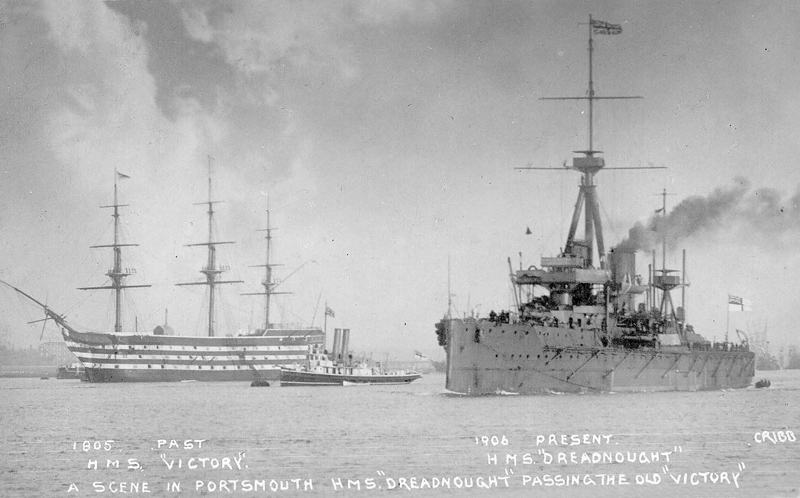
1906 HMS Dreadnought and HMS Victory in Portsmouth harbour. Cribb
In the commencement ot 1808, our ally, Sweden, being threatened by an invasion by Russia, a fleet was sent to the Baltic to assist them, of which Sir James Saumarez was appointed Commander-in-Chief, and the HMS Victory was once more called into active service as his flagship. She was commissioned on 18th March, by Captain Dumaresq, and sailed for the Baltic shortly after, arriving at Gottenburg at the end of April. To this place the fleet was followed by a force of 10,000 men under Sir John Moore, who, however, in consequence of disagreements, were withdrawn in June and returned to England, leaving Sir James with the Victory and ten 74-gun ships, to protect Sweden against Russians, Danes, French, and Prussians. In August, the advanced division of the Anglo-Swedish fleet met the Russians, and chasing them into Rogerwick, destroyed one 74 and blockaded the remainder in that port. Sir James, who was on his way north, received this intelligence a few days afterwards, and hastened to join.
- A Short History of HMS Victory, Engagement with the French off Ushant – Part One
- A Short History of HMS Victory, Siege of Gibralta, Occupation of Toulon – Part Two
- A Short History of HMS Victory, Imminent peril of the Victory – Part Three
- A Short History of HMS Victory, Battle of Cape St. Vincent – Part Four
- A Short History of HMS Victory, Blockade of Toulon – Part Five
- A Short History of HMS Victory, Nelson’s pursuit to the West Indies - Part Six
- A Short History of HMS Victory, Battle of Trafalgar – Part Seven
- A Short History of HMS Victory, Death of Nelson, Damage sustained by Victory – Part Eight
- A Short History of HMS Victory, Victory again in Active Service – Part Nine